
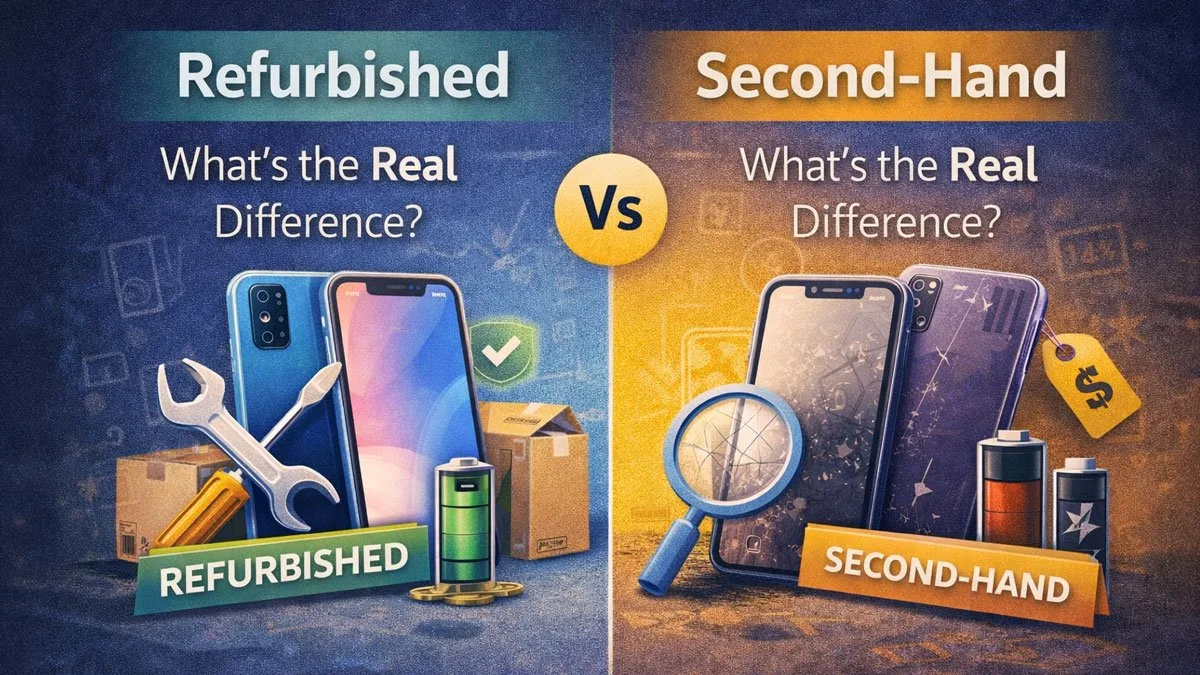
If you want a new phone but don’t want to pay full price, you’re not alone. The big question is whether to go for a refurbished phone or a second-hand one.
I understand the confusion. People often use these terms as if they mean the same thing, but they don’t. Picking the wrong one could mean missing out on a good deal or ending up with a useless phone.
I’ll explain the differences based on my own experience with both types of phones.
What Exactly is a Refurbished Phone?
A refurbished phone is a used device that has been professionally restored to good working order. It’s similar to a car that has passed a certified inspection and repair process.
Here's what typically happens: Someone returns a phone (maybe they didn't like the color, or it had a minor defect), or it gets traded in. Instead of tossing it, the manufacturer or a certified refurbisher puts it through the wringer.
The process usually includes:
Complete diagnostic testing of every component
Replacing any faulty parts with genuine or certified alternatives
Cleaning and sometimes replacing the outer casing
Wiping all data and reinstalling the operating system
Repackaging with accessories (often new)
Quality control checks before sale
The main difference is that a trained professional has restored the device, not just a casual seller.
Grading Systems Matter
Most refurbishers use a grading system to describe the cosmetic and functional condition of their phones, but the specifics can vary between sellers. Common grades include: Grade A (like new, minimal to no signs of wear), Grade B (light scratches or scuffs, fully functional), and Grade C (noticeable wear, still fully operational). Always check how each seller defines these grades.
GradeConditionWhat to ExpectGrade A / ExcellentLike newMinimal to no cosmetic wear, looks almost brand newGrade B / GoodLight wearGood Light wear Minor scratches or scuffs, fully functionalGrade C / FairNoticeable wearFair Noticeable wear Visible scratches, dings, or marks, but works perfectlyGrade D / PoorHeavy wearPoor Heavy wear Significant cosmetic damage, but still operational
I always tell people: if you're buying refurbished, know your grade. Don't expect a Grade C phone to look pristine, but also don't accept a heavily damaged phone sold as Grade A.
Grade A phones should look almost new, with minimal wear. Grade B shows small scratches and scuffs. Grade C is clearly used—fine if price matches.
Now that we've covered refurbished phones, let's look at what makes second-hand phones different.
Second-hand phones are exactly what they sound like: used phones sold directly from one person to another, or through platforms that facilitate these sales without much intervention.
This includes places like Facebook Marketplace, OLX, or even someone at work selling their old phone. There’s no formal inspection, certification, or guarantee that anything has been fixed or tested.
You get exactly what is offered. Sometimes this works out well, but other times it can go badly.
The Wild West Factor
Buying second-hand is completely unregulated. The quality depends entirely on:
How honest the seller is
How well they took care of the device
Whether they're disclosing all the issues
Your ability to spot problems before buying
I've seen people score amazing deals on second-hand phones. I've also seen people buy what they thought was a "gently used" iPhone only to discover the battery dies at 40%, the camera's blurry, and there's water damage the seller "forgot" to mention.
Warning signs: vague descriptions, no photos of damage, very low prices, or unhelpful sellers. Some deals are legit, others have hidden issues.
The Real Differences That Actually Matter
Let's get specific about what sets these two options apart.
Quick Comparison
FeatureRefurbishedSecond-HandProfessional testing✓ Yes✗ NoWarranty included✓ Usually 6-12 months✗ Rarely (as-is)Return policy✓ Typically 30 days✗ Usually noneParts replaced✓ Faulty components swapped✗ Sold as-isPriceModerateLowestRisk levelLowerHigherQuality guarantee✓ Graded & certified✗ Seller dependent
1. Quality Assurance
Refurbished: Professional testing and repairs. You're getting a device that's been through multiple checkpoints. Most reputable refurbishers test the battery, screen, cameras, speakers, charging port, buttons, and connectivity features.
Second-hand phones have no quality checks unless you perform them yourself. Even if the seller says it works, issues may appear later.
2. Warranty and Returns
This is very important.
Refurbished phones typically come with:
6 months to 1 year warranty (sometimes longer)
30-day return window
Customer support channels
Protection against defects
Second-hand phones:
Usually sold "as is"
No warranty (unless buying from a platform with buyer protection)
Returns are rare and usually only if the item is completely different from what was described
You're on your own if something breaks
I bought a refurbished Samsung Galaxy last year with a 12-month warranty. The charging port broke after three months and was fixed for free. With a second-hand phone, I would have paid for the repair.
3. Price Differences
Here's where it gets interesting.
Second-hand phones are generally cheaper because:
No refurbishment costs
No warranty costs baked in
Sellers just want to recoup some money
Direct person-to-person sales cut out middlemen
Refurbished phones cost more because:
Professional labor and testing
Replaced components
Warranty coverage
Company overhead
Example pricing (iPhone 13, 128GB):
Brand new: ₹56,000 – ₹63,000 (Official retail price + most common selling range in India)
Refurbished Grade A: ₹34,000 – ₹40,000 (Refurbished by a professional seller with tested parts, cleaned, and warranty for 3–12 months)
Second-hand (good condition): ₹28,000 – ₹34,000 (Person-to-person used phone; battery wear and tear varies, no warranty)
Price differences aren’t always large. Warranty and peace of mind can justify paying more.
4. Where You Can Buy Them
Refurbished phones:
Manufacturer websites (Apple Certified Refurbished, Samsung Certified Re-Newed)
Major retailers (Best Buy, Amazon Renewed, Walmart)
Specialized refurbishers (Gazelle, Back Market, Decluttr)
Carrier stores
Second-hand phones:
Online marketplaces (eBay, Facebook Marketplace, Craigslist, OLX)
Local buy/sell/trade groups
Pawn shops
Friends and family
5. Trustworthiness
Not everyone selling second-hand phones is untrustworthy, but the level of trust is very different compared to buying refurbished.
With refurbished phones from reputable sellers, you have:
Company reputation on the line
Consumer protection laws
Payment protection through major platforms
Documented purchase history
With second-hand purchases:
Anonymous or semi-anonymous sellers
Cash transactions with no paper trail
Limited recourse if things go wrong
Higher fraud risk
There are many stories of people buying phones described as "unlocked" that were actually carrier-locked or even stolen.
Having walked through the pros and cons, you might be wondering which option is best for your needs.
There is no single answer for everyone, so here is a breakdown by situation.
Buy Refurbished If:
If you want peace of mind, go refurbished; the warranty is worth it. Electronics can fail unexpectedly.
You're not tech-savvy. If you can't confidently test a phone's features, spot signs of water damage, or check whether a battery has been degraded, let the professionals handle it.
You're buying a premium phone. Spending ₹50,000+ on a device? Get the protection. The price difference between second-hand and refurbished shrinks on expensive models anyway.
You need financing options. Many refurbished sellers offer payment plans, which individual sellers do not.
You want guaranteed quality. Certified refurbishers actually stand behind their products.
Buy Second-Hand If:
You know what you're doing. You can run diagnostics, check for blacklisted IMEIs, spot cosmetic vs. functional issues, and aren't afraid to walk away.
Budget is absolutely critical. Every rupee counts, and you're willing to take on more risk to save ₹5000 - ₹10000.
You're buying locally and can test thoroughly. Meeting in person, spending 20 minutes testing everything, and negotiating based on what you find is totally doable.
You trust the seller. Buying from a friend, family member, or someone with verifiable history and reviews changes the game.
You're okay with no safety net. If the phone breaks next month, you're prepared to either fix it yourself or eat the cost.
How to Avoid Getting Burned (Both Options)
For Refurbished Phones:
Buy from certified sources. Stick with manufacturer-certified programs or well-known refurbishers with actual track records.
Read the warranty terms. What's covered? For how long? Are returns free, or do you pay shipping?
Check the grading honestly. If cosmetic condition matters to you, don't cheap out on a Grade C and then complain.
Look for genuine parts. Some refurbishers use third-party components. Ask if parts are OEM (original equipment manufacturer).
Research the seller. Look up reviews, check Better Business Bureau ratings, and see what people say on Reddit.
For Second-Hand Phones:
Meet in public. Police station parking lots are perfect. Scammers hate witnesses.
Test everything. And I mean everything:
Make a call (speaker and earpiece); listen for crackling or distortion
Test both cameras; take actual photos and check they're not blurry or have spots
Check the charging port with your own cable, wiggle it gently to ensure it's not loose
Connect to WiFi and cellular data, browse a website to confirm both work
Test Face ID, fingerprint sensors, and try it multiple times to ensure consistency
Check for screen responsiveness in all corners, and draw patterns in all areas
Look for water damage indicators (usually near the SIM tray); they turn red/pink when wet
Play a video at full volume, check that both speakers work
Check the flashlight and vibration motor
Spend at least 15 minutes testing. It’s worth any awkwardness to avoid post-purchase issues.
Check the IMEI. Use free online tools to check whether the phone has been reported stolen or is still locked to a carrier. This is non-negotiable.
Get it in writing. Even a simple text saying "Phone works, no issues" gives you something to fall back on if things go south immediately.
Trust your gut. Price too good to be true? Seller dodging questions? Can't meet in person? Walk away.
The Battery Question Everyone Asks
Battery health is often the hidden problem with used phones.
Refurbished phones: Many replace the battery as part of the refurbishment process, especially on Grade A devices. Always ask about this. A new battery can add ₹1500-₹3000 to the cost, but it is absolutely worth it.
Second-hand phones: The battery is probably degraded, especially if it's 2+ years old. iPhones let you check battery health in settings (Settings > Battery > Battery Health). For Android, you'll need apps like AccuBattery.
If a phone’s battery health is below 80%, consider the cost of replacing it, which can be ₹2500 to ₹4000 depending on the model.
What About Software and Updates?
Something people forget: software support.
Both refurbished and second-hand phones have the same limitations here; it depends on the phone's age and manufacturer support, not whether it's refurbished.
A refurbished iPhone 11 will receive the same iOS updates as an iPhone 11 bought second-hand or brand new. But an iPhone 8? You're near the end of the update road.
Android is trickier because manufacturers vary wildly. Samsung flagship phones now get about 4-5 years of updates. Budget Android phones? Maybe 2 years.
Always check: How long will this phone receive security updates? If it's already stopped or will stop soon, is the discount worth the security risk?
My Honest Take After Buying Both
I've owned both refurbished and second-hand phones, and here's what I've learned:
Refurbished phones are worth the extra cost if you are spending over ₹30,000 or plan to keep the phone for more than two years. The warranty has saved me money before, making the higher price worthwhile.
Second-hand can be amazing if you're patient, knowledgeable, and a little lucky. I bought a Samsung S23 from a coworker for ₹25,000, and it's still running perfectly two years later. But I also saw the phone, tested it, and trusted the person.
For most people, especially those who are not very comfortable with technology, refurbished phones are the safer choice. They offer a balance between new and used, providing many of the benefits of both.